
Smooth Daily Transitions: Make Kids' Routines Fun

Every parent has been there: the morning rush dissolving into tears, the endless battle to leave the playground, or the bedtime routine spiraling into a defiant tantrum. For parents of toddlers and preschoolers, daily transitions can often feel like navigating a minefield of emotional explosions. These moments, whether shifting from play to learning, home to car, or even just from one activity to the next, are frequently the biggest trigger for meltdowns and resistance in young children. The struggle is real, and it often leaves parents feeling exhausted, frustrated, and questioning how to make these necessary shifts smoother for everyone.
But what if there was a way to transform these challenging moments into opportunities for growth, cooperation, and even fun? This post is designed to equip you with practical, empathy-driven strategies to achieve smooth daily transitions kids can embrace. By understanding the underlying reasons for their resistance and introducing engaging techniques, you can significantly reduce daily meltdowns, foster a sense of predictability, and cultivate a more peaceful, cooperative home environment. Get ready to turn friction into flow and empower your little ones to navigate their day with confidence and joy.
Understanding the "Why" Behind Resistance
To manage transitions, understand why kids struggle. They aren't difficult; their brains aren't equipped for rapid changes or complex emotional regulation. Key factors:
- Lack of Control: Kids have little control. Stopping a beloved activity can feel disempowering. Resistance is often a bid for autonomy.
- Underdeveloped Prefrontal Cortex: The prefrontal cortex (planning, impulse control) is still developing. Children struggle to "stop" one activity and "start" another, especially when engrossed.
- Emotional Regulation Challenges: Kids lack sophisticated coping mechanisms. Sudden transitions trigger anxiety, frustration, or sadness, expressed as meltdowns.
- Attachment to the Present Moment: Children live in the here and now. "Five more minutes" is abstract. Being pulled from an immersive activity feels abrupt.
- Need for Predictability: Predictable routines offer comfort. Inconsistent transitions create anxiety, leading to resistance. Kids thrive knowing what comes next.
Understanding these developmental realities shifts our perspective from "misbehaving" to "struggling." This empathy facilitates smooth daily transitions kids can manage with greater ease.
Gamify Routines: Turn Chores into Cheers
Make transitions less painful by infusing fun. Turning routines into games reduces resistance and increases cooperation. Gamify your schedule:
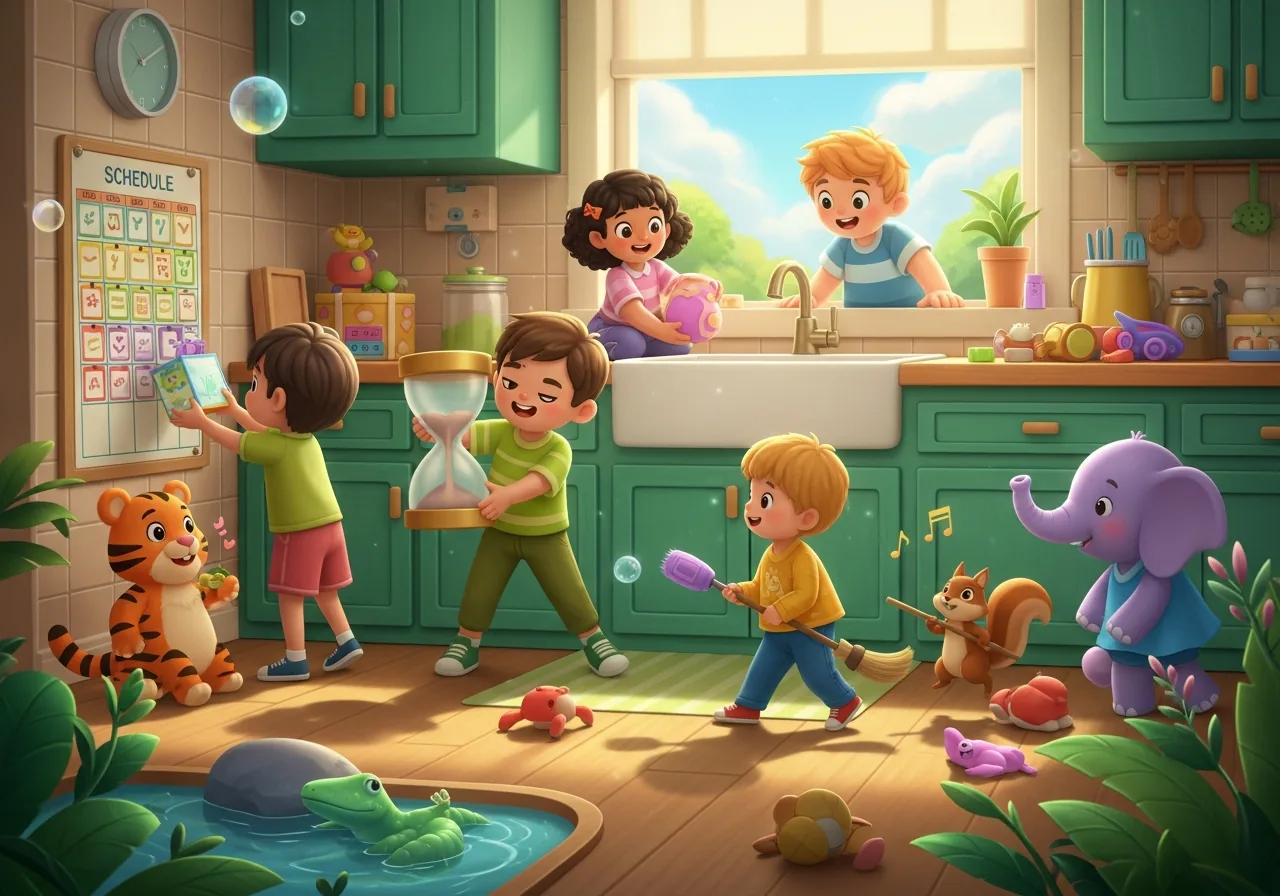
- Visual Schedules and Timers: Create visual schedules with pictures; let your child help. Use fun timers (sand timer, app) to signal transitions. "Sand out, shoes on!" empowers self-management.
- Songs and Rhymes: Develop catchy songs/chants for routine tasks. A "clean-up song" or "bath time splash" makes tasks fun. Music is soothing and motivating.
- Choice and Control: Offer limited choices: "Left shoe or right shoe first?" "Hop to the bathroom or crawl?" Provides autonomy, reducing power struggles.
- Role-Playing and Imagination: Turn tasks into imaginative play. "Race cars to the car!" or "Astronaut brushing teeth!" Taps into pretend play, making transitions exciting.
- Storytelling Adventures: Engage imagination via narrative. "Siso the tiger needs help making his stripes sparkle, we brush ours to help!" Twistale leverages storytelling, using a choose-your-own-adventure format for interactive routines. Child-driven choices lead to participation.
Empowering Kids Through Predictability and Participation
Beyond gamification, consistency and child involvement are vital for cooperation and independence. These strategies empower children, making them active participants.
- Pre-warnings and Transition Cues: Always provide advance notice: "Five minutes, then clean up for the park." Use consistent cues. Gives children time to prepare, reducing shock.
- Transition Objects: For separation anxiety, a comfort object (blanket, toy) provides security during transitions (daycare, doctor's visits).
- Involve Them in Planning: Involve children in planning their day: "What's first when we get home?" "Blue or green pajamas?" Fosters ownership.
- Positive Reinforcement and Acknowledgement: Praise cooperation, even small steps: "Great job putting toys away!" Acknowledge feelings without dictating outcomes: "I know you're sad, but it's time to go home."
- Practice and Patience: Smooth transitions are a skill. Be patient with setbacks. Gently guide, reiterate expectations, model calm transitions. Celebrate small victories.
- Consistency is Key: Consistent routines create predictability. When children know what to expect, they feel secure and resist less. Incorporate variations with advanced warnings.
By consistently applying these, you're teaching crucial life skills: self-regulation, problem-solving, cooperation. These build resilient individuals, making smooth daily transitions kids need truly transformative.

Mastering smooth daily transitions with toddlers and preschoolers takes time. Embrace empathy, creativity, and consistency to transform struggle into growth. Understanding their stage, gamifying routines, and empowering them with predictability are key. With patience, you'll reduce meltdowns, foster cooperation, and create a joyful home, paving the way for truly smooth daily transitions kids (and parents!) will appreciate.