
Help Kids Adapt to Change: Build Flexibility with Interactive Stories

Young children thrive on predictability. Routines, familiar faces, and known environments provide a comforting framework for their developing minds. So, what happens when that framework is suddenly shaken? A new sibling arrives, a different school year begins, or a beloved toy breaks. For many parents, these moments can trigger intense emotions in their little ones – tears, tantrums, anxiety, or withdrawal. It's a universal challenge: how do we equip our children, especially those between the ages of 2 and 7, to navigate the inevitable shifts and surprises that life throws their way?
The good news is that resilience and adaptability aren't inherent traits; they are skills that can be gently nurtured and strengthened. Imagine a tool allowing children to explore outcomes, make choices without real-world pressure, and understand that change, while unsettling, often leads to new possibilities. This is where interactive stories come in. By immersing themselves in narratives where they control the direction, children gain invaluable practice in thinking flexibly, problem-solving, and building confidence to embrace change. They learn to be more flexible and resilient when facing new situations or unexpected outcomes.
The Wobbly World of Childhood: Why Change is Hard for Little Ones
For adults, change is a constant; we learn to roll with the punches. But for a two-year-old whose entire world revolves around a predictable schedule, or a six-year-old who finds comfort in knowing exactly what will happen next, even minor deviations can feel monumental. Their cognitive and emotional development means they often lack the tools to process uncertainty, leading to big feelings and challenging behaviors.
Consider the typical reactions when kids adapt to change: a sudden meltdown because the usual breakfast cereal is finished, an outburst of anger when playtime is interrupted by a bath, or a bout of shyness and withdrawal when introduced to a new group of children. These aren't necessarily signs of defiance; they are often expressions of a young mind struggling to cope with a disruption to their perceived order. Predictability provides a sense of security and control, and when that's missing, anxiety can quickly take root.
Children aged 2-7 are still developing executive functions like planning and cognitive flexibility. They're not yet equipped to easily shift focus, adjust to new rules, or consider multiple perspectives. Teaching flexibility means gently guiding them to understand alternatives, consequences, and that unexpected turns can lead to positive experiences. Building this foundation early is crucial for their long-term emotional well-being and thriving in an ever-changing world.
Building Bridges to Flexibility with Interactive Storytelling
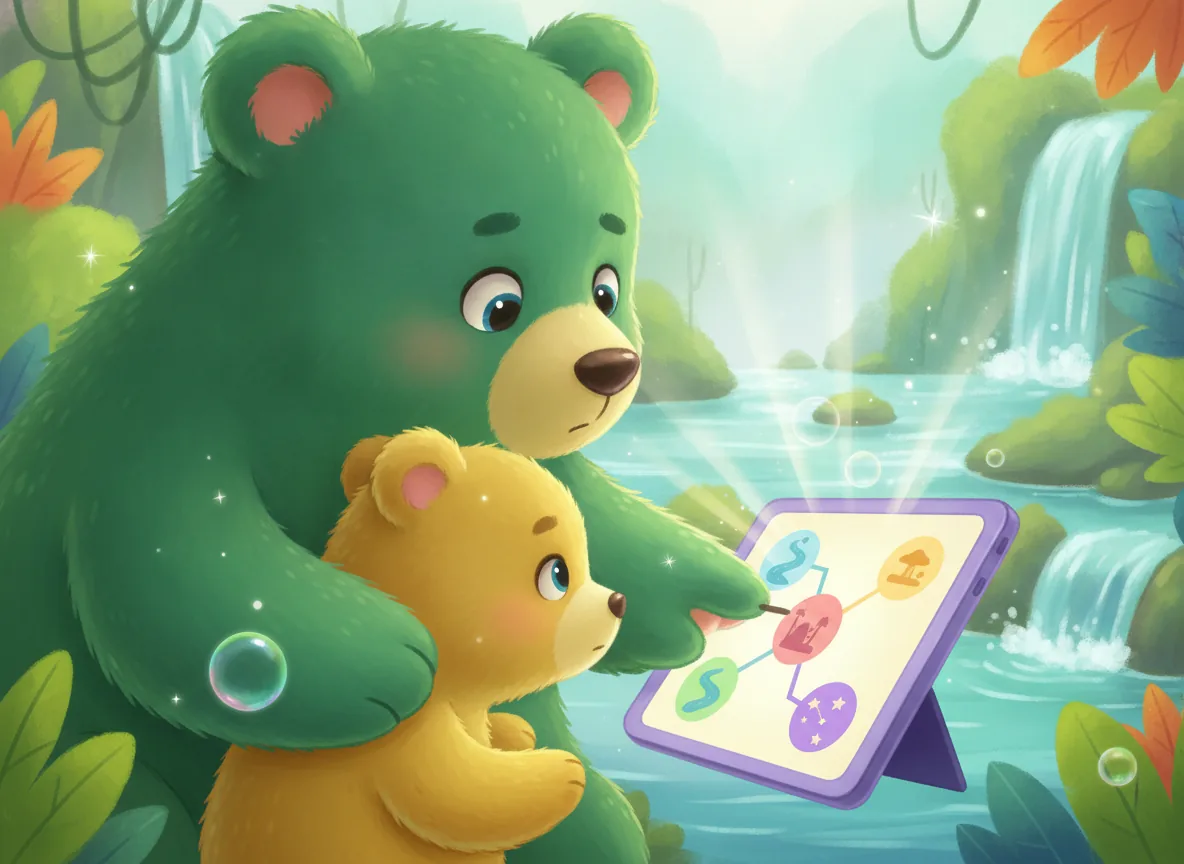
Enter the world of interactive stories – a powerful, playful, and developmentally appropriate way to help kids adapt to change. Unlike traditional narratives where children are passive recipients, interactive stories, especially those in a choose-your-own-adventure format, invite children to become active participants. They make decisions, choose paths, and experience the immediate (and safe) consequences of those choices.
Consider Siso the tiger, a character from the interactive story platform Twistale. Siso might face a dilemma: try a new, unfamiliar food, or stick to his favorite bamboo? Should he help a lost bird, even if it means changing his plans? Through Siso's adventures, children 'try on' different reactions and see how choices unfold. If Siso tries the new food and loves it, the child learns about trying new things. If he helps the bird, they learn empathy. This safe exploration shows that outcomes vary, and adapting often brings positive results.
This format provides a low-stakes environment for children to experiment with flexibility. With no "wrong" answers, only different story paths, children learn to:
- Develop problem-solving skills: Each choice presents a mini-problem.
- Understand cause and effect: Decisions directly alter the story's direction.
- Practice perspective-taking: Exploring alternate character choices fosters empathy.
- Build resilience: If a path leads to an unexpected outcome, they can simply go back and try another, learning that "failure" is an opportunity to adapt.

Guiding Your Little Explorer: Maximizing Interactive Story Benefits
Simply handing your child an interactive story isn't enough; active engagement from parents amplifies the learning. Here’s how to make the most of these powerful tools to help your kids adapt to change:
- Discuss the Choices: Before a decision, ask: "What do you think will happen if Siso goes this way?" After, discuss the outcome: "Siso chose this; what if he hadn't?"
- Explore Multiple Paths: Revisit decisions to show different outcomes. "Let's see what happens if Siso made a different choice." This teaches that there isn't always one "right" way, fostering flexibility.
- Connect to Real Life: Draw parallels. "Remember when you were scared to try the new park, just like Siso was scared of the unknown path?" These connections solidify story lessons.
- Emphasize Feelings: Talk about characters' emotions. "How do you think Siso felt when his plan changed?" This helps children process their own feelings.
- Celebrate Adaptability: In real life, acknowledge and praise flexibility. "You were disappointed about the rain, but you found your favorite book! Great adapting!"
By engaging with interactive stories as a team, you provide not just entertainment, but a powerful training ground for one of life's most essential skills: the ability to navigate change with grace, curiosity, and confidence. These shared moments become opportunities for growth, turning potential struggles into lessons in resilience.
Helping kids adapt to change is one of the most valuable gifts we can give them. In an ever-evolving world, flexibility, resilience, and creative problem-solving are essential. Interactive stories offer a unique and engaging pathway to cultivate these skills, allowing children to safely explore life's unpredictable nature within a comforting narrative. So, the next time you're looking for a fun and enriching activity, consider diving into a choose-your-own-adventure with your child. You'll be building not just a story, but a stronger, more adaptable little human ready for life's twists and turns.